
Coastal Fence Maintenance: Making Your Fence Last in Salt Air
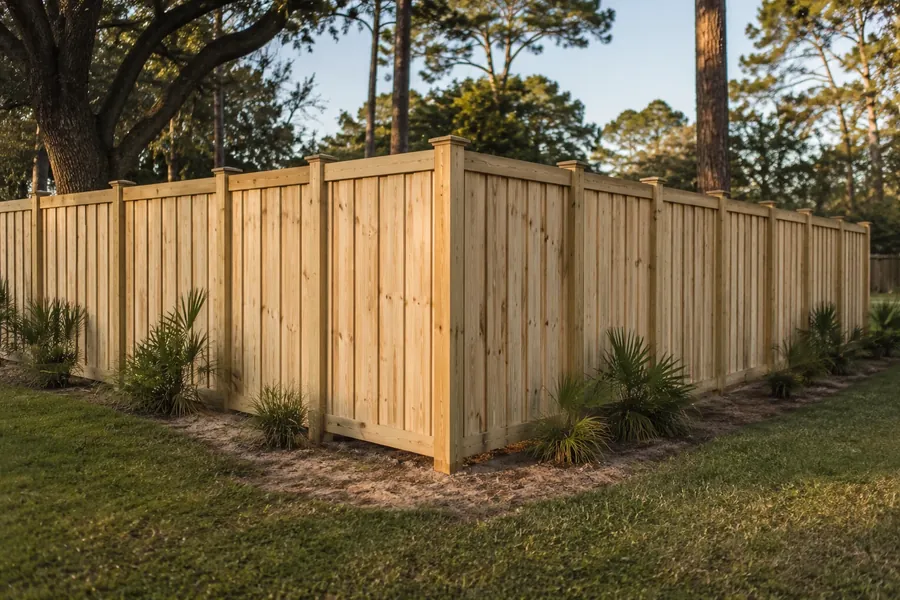
A fence on the Cape Fear coast lives a hard life. Salt film, high humidity, intense UV, and mildew all work on it year-round. The good news is that a little routine maintenance goes a long way — often doubling a fence's usable life. Here's a simple, material-by-material routine that takes very little time.
Everything: rinse off the salt
The most useful habit for any coastal fence is an occasional rinse with a garden hose to wash off accumulated salt film. Salt is what accelerates corrosion and degrades finishes, so simply removing it periodically — more often the closer you are to the water — helps every material last longer. This one step matters at Wrightsville Beach as much as it does a few miles inland.
Wood: seal, inspect, repeat
Wood needs the most attention. The routine:
- Seal or stain every 2–3 years (after the fence has dried out in its first year) to protect against salt, moisture, and UV. This is the single biggest thing you can do for a wood fence here.
- Inspect the base of posts and pickets once a year for soft spots or rot, especially where wood meets soil.
- Check fasteners and hardware for rust bleed; replace any failing hardware with galvanized or stainless.
See our wood privacy fencing page for how coastal wood should be built in the first place — good construction makes maintenance easier.
Vinyl: the easy one
Vinyl asks for almost nothing. Rinse off salt film, and once or twice a year wash it with mild soapy water to clear the mildew our humidity encourages. No sealing, sanding, or painting. That low upkeep is the whole appeal — details on our vinyl fencing page.
Aluminum: rinse and check hardware
Powder-coated aluminum is nearly maintenance-free. Rinse off salt and debris occasionally, and check gate hinges and latches for smooth operation — a shot of corrosion-resistant lubricant keeps moving parts happy in salt air. Touch up any deep scratches in the powder coat to prevent them becoming corrosion points.
Chain-link: watch the fittings
For chain-link, keep an eye on the fittings and tension bands where corrosion tends to start, especially on galvanized (non-coated) fence. Rinse off salt, and address any rust early. Vinyl-coated chain-link needs less attention thanks to its polymer barrier.
Gates get the most wear
Whatever the material, your gate is the hardest-working part — it moves every day. Check that it still swings true and latches cleanly, tighten hardware as needed, and lubricate hinges. Catching a sagging gate early is far cheaper than rebuilding it.
A little now saves a lot later
None of this takes much time, and it's the difference between a fence that fails early and one that lasts its full life on the coast. If an inspection turns up rot, corrosion, or storm damage beyond simple upkeep, we can help with repairs. Get in touch anytime for advice or a free estimate.
