
Wood & Privacy Fencing in Wilmington, NC
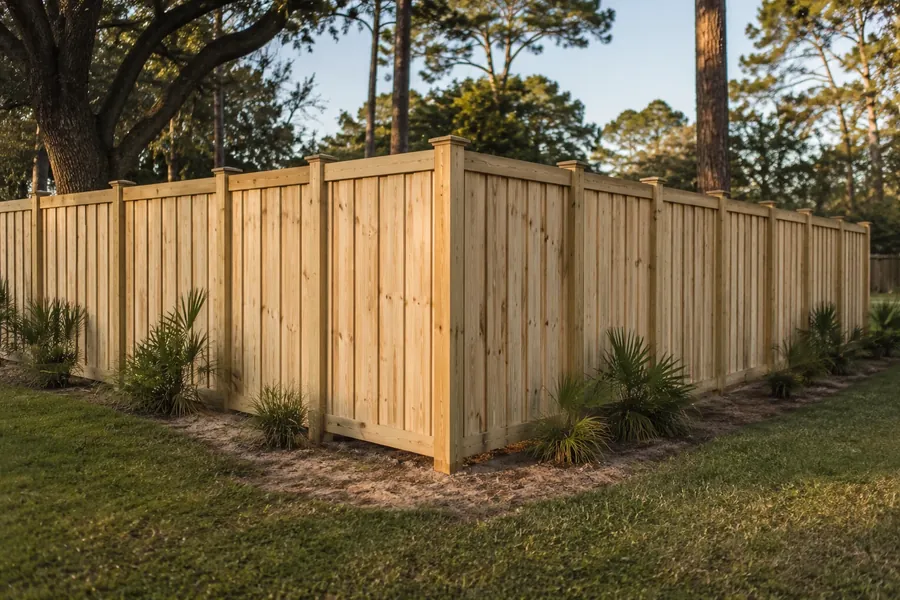
A wood privacy fence is still the most popular choice on the Cape Fear coast — and for good reason. It delivers real privacy, a warm natural look that suits everything from historic downtown Wilmington to a new build in Leland, and a price point most homeowners can work with. The catch is that wood and salt air are natural enemies. Build it the way an inland contractor would and it will cup, gray, and lean within a few seasons. Build it for the coast and it will serve you for a decade or more.
At Wilmington Fence Co., wood privacy fencing is one of our most-requested installs, and we've learned exactly where corners get cut. This page walks through what goes into a proper coastal wood fence, the styles we build, and how we keep it standing through hurricane season.
What a wood privacy fence includes
A privacy fence is a solid or near-solid barrier, typically six feet tall, that blocks sightlines into your yard. A complete installation from us includes:
- Pressure-treated Southern Yellow Pine or Western Red Cedar pickets, rated for ground contact and coastal humidity.
- Concrete-set posts at a depth matched to our sandy soil and wind loads — not the minimum an inland job would use.
- Hot-dipped galvanized or stainless fasteners so your hardware doesn't rust-streak the boards after the first summer.
- A gate sized to your access needs — see our gates & access options for automated and double-drive gates.
Privacy styles we build
| Style | Best for | Coastal notes |
|---|---|---|
| Board-on-board | Total privacy, premium look | Overlapping boards hide gaps even as wood moves seasonally. |
| Shadowbox (good-neighbor) | Wind-prone lots, shared property lines | Alternating boards let gusts pass through — a smart pick near the water. |
| Stockade / side-by-side | Budget privacy | Solid face; we space correctly to allow for swelling. |
| Horizontal | Modern homes, Midtown & Mayfaire builds | Requires premium boards and tight framing to stay straight. |
Why coastal wood fences fail — and how we prevent it
Three things kill a wood fence in southeastern North Carolina: wind, moisture, and cheap hardware. Our sandy, fast-draining soil means posts can work loose if they aren't set deep enough in concrete, and a solid six-foot fence acts like a sail when a named storm rolls up the coast. We address this head-on with deeper footings, correct post spacing, and — on the most exposed lots — a shadowbox design that lets wind pass through instead of pushing the whole run over. If you want the full engineering picture, our guide on building a hurricane-resistant fence breaks down footing depth and post spacing in detail.
Moisture is the slower killer. Salt-laden humidity above 60% — the coastal baseline — accelerates rot at the base of pickets and rusts anything that isn't galvanized or stainless. That's why we never use bright (uncoated) fasteners, and why we recommend sealing the wood in its first year. Our coastal fence maintenance guide covers the simple annual routine that doubles a wood fence's lifespan here.
Wood vs. the alternatives
Wood wins on price and natural warmth, but it asks for maintenance. If you love the privacy but not the upkeep, coastal-grade vinyl gives you a similar solid look with far less maintenance — we compare the real numbers in wood vs. vinyl fence cost. If you're closer to the water and want something that shrugs off salt entirely, aluminum is worth a look, though it trades privacy for airflow and views.
Permits, HOAs, and property lines
New Hanover County requires a permit for most privacy fences, and it verifies height, setback, and that you're not building over a utility or stormwater easement. Many neighborhoods add their own rules on top — height caps, approved styles, and architectural review. We handle this every week and can guide you through it; our Wilmington fence permit & HOA guide is a good primer. We build wood privacy fencing throughout Wilmington, the growing corridors of Porters Neck and Ogden, and out to Hampstead.
Thinking board-on-board vs. shadowbox? Tell us your lot's exposure to the water and prevailing wind on the free estimate form and we'll recommend the design that will actually last where you live.
Frequently Asked Questions
How tall can a wood privacy fence be in Wilmington?
What type of wood holds up best on the coast?
Should I get shadowbox or solid board-on-board near the water?
How long will a wood fence last here?
Do I need to stain or seal my new wood fence?
Can you match a fence to my HOA's approved style?
Ready for a Fence That Lasts on the Cape Fear coast?
Tell us about your project and we'll get you a clear, honest estimate — built for salt air, sandy soil, and storm season. No pressure, no hard sell.
Get My Free Estimate