
Wood vs. Vinyl Fence: Cost & Lifespan on the Coast
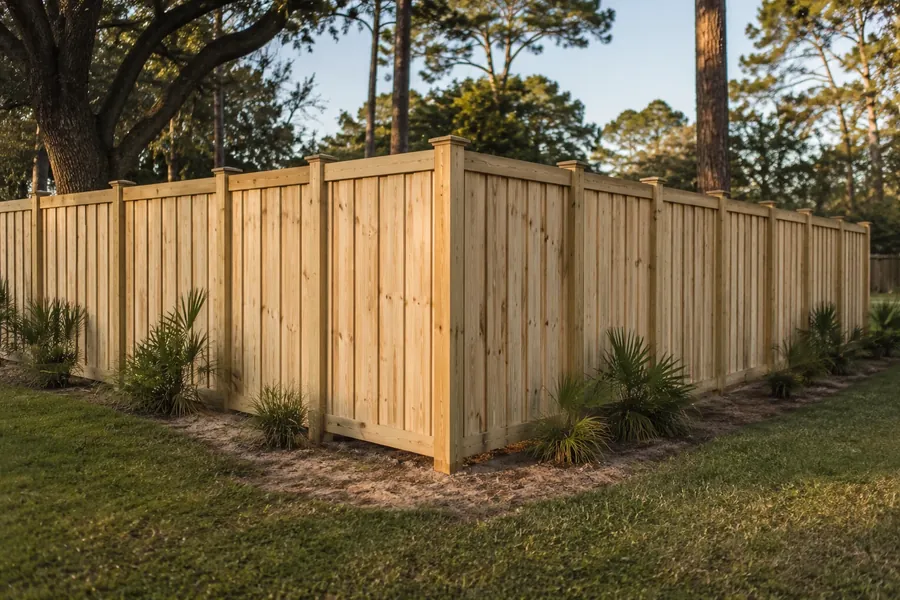
When homeowners want privacy, the choice usually comes down to wood versus vinyl. Both give you a solid backyard barrier; they just get there differently — and the "cheaper" option depends entirely on whether you're looking at this year or the next fifteen. Here's an honest comparison for a Cape Fear-coast fence.
Up-front cost
Wood wins the sticker price. A pressure-treated wood privacy fence generally costs less to install than vinyl of comparable height and length. If your budget is the deciding factor right now, wood gets you privacy for less. Western Red Cedar narrows the gap — it costs more than pine but still typically less than vinyl.
Maintenance cost (this is where it flips)
Wood is not a "set it and forget it" fence, especially here. To last in salt air it wants sealing or staining every couple of years, plus the occasional board or fastener replacement. Those costs and weekends add up. Vinyl needs essentially none of that — an occasional rinse and it's done. Over a decade, the maintenance savings on vinyl often erase its higher up-front cost. Our maintenance guide lays out what wood upkeep actually involves on the coast.
Lifespan on the coast
| Wood (coastal-built & maintained) | Coastal-grade vinyl | |
|---|---|---|
| Typical lifespan | ~12–18 years | ~25–30+ years |
| Maintenance | Seal every 2–3 yrs; repairs | Occasional rinse |
| Salt-air behavior | Can rot/gray without upkeep | Won't rot or corrode |
| Look | Warm, natural, classic | Uniform, clean, modern |
Neglected wood in this climate can fail well before that 12-year mark, while quality vinyl keeps going with almost no attention. That longevity is the core of vinyl's value argument.
So which should you buy?
Choose wood if you want the lowest up-front cost, love a natural look, and don't mind (or even enjoy) periodic upkeep. Explore wood privacy fencing.
Choose vinyl if you want to install it once and essentially forget it, and you're planning to stay long enough to bank the maintenance savings. Explore vinyl fencing.
One more factor: exposure. Very close to the water, a third option — aluminum — may beat both for durability if you can trade privacy for an open view. Still torn? Get a free estimate and we'll price out your project in both materials so you can compare real numbers for your yard in Wilmington or wherever you are on the coast.
