
Vinyl (PVC) Fencing in Wilmington, NC
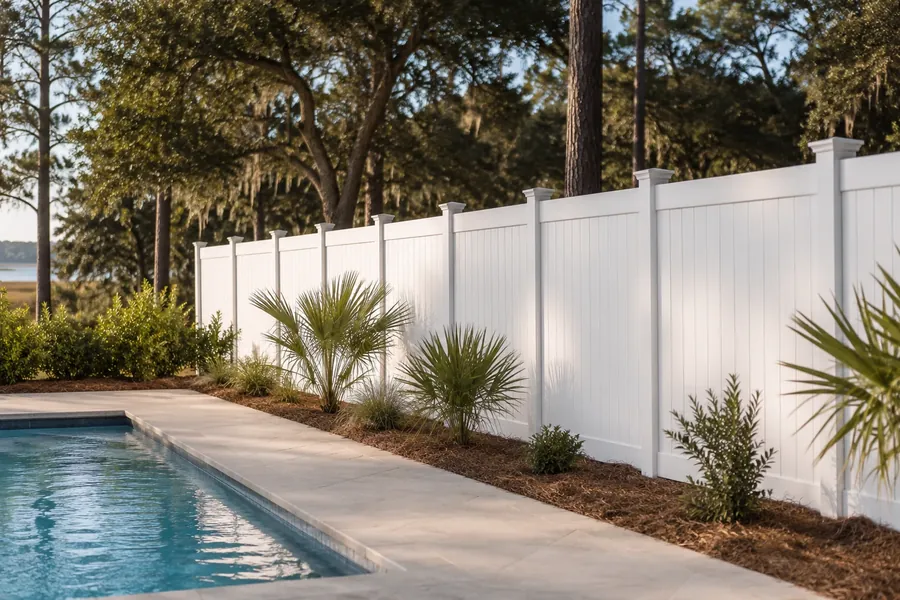
Vinyl is the low-maintenance answer to the coast's biggest fencing headache: upkeep. It never needs staining, it won't rot, and it shrugs off the mildew that thrives in our humidity. For families in Porters Neck, Scotts Hill, and the newer subdivisions filling in around Wilmington, it's often the sweet spot between wood's warmth and aluminum's durability — as long as you buy the right grade.
That caveat matters more here than almost anywhere. Bargain vinyl and coastal sun do not mix. Below we explain what "coastal-grade" actually means, the styles we install, and how we keep vinyl looking new for decades in a salt-air environment.
Why vinyl grade matters on the coast
All vinyl fencing is not created equal. Thin, low-titanium-dioxide PVC can grow brittle and discolor after about ten years of intense UV and salt exposure — exactly the conditions we have. We spec heavier-wall, UV-stabilized coastal-grade vinyl with:
- Higher TiO₂ content for UV resistance, so the white stays white and colors don't chalk.
- Thicker walls and internal aluminum-reinforced rails on taller privacy panels, so they don't flex and pop in wind.
- Stainless-steel fasteners and reinforced brackets — the same corrosion-proofing logic we apply to every coastal material choice.
Buy vinyl on price alone and you'll be replacing it in a decade. Buy it built for the coast and it can outlast a wood fence two or three times over with almost no maintenance.
Vinyl styles we install
| Style | Look | Common use |
|---|---|---|
| Privacy (tongue-and-groove) | Solid, clean face | Backyards, pool enclosures |
| Semi-privacy / lattice-top | Solid with decorative top | Airflow + curb appeal |
| Picket | Classic coastal cottage | Front yards, historic districts |
| Ranch rail | Open 2- and 3-rail | Larger lots, property borders |
Vinyl and pool enclosures
With so many pools across the Wilmington area, we install a lot of vinyl pool fencing. Vinyl is a natural fit — it won't corrode from splash-out or pool chemicals the way untreated metal can, and it's easy to clean. We build to New Hanover County's pool-barrier requirements (self-closing, self-latching gates and correct height), and we can pair a privacy run with a see-through aluminum section where you want to keep a water view.
Maintenance: the easy part
This is where vinyl earns its keep. There's no sanding, staining, or sealing — just an occasional rinse to clear salt film and the light mildew our humidity encourages. A garden hose and, once or twice a year, a bucket of soapy water is genuinely all it takes. Our coastal maintenance guide has the quick routine.
Vinyl vs. wood vs. aluminum
If you want privacy with the lowest possible upkeep, vinyl is usually the winner. If you love natural wood grain and don't mind maintenance, compare the lifetime numbers in our wood vs. vinyl cost breakdown, or look at our wood privacy fencing. If you're right on the water and want something that ignores salt entirely while keeping the view open, aluminum is the move. We install all three across Wilmington and Carolina Beach, and we'll give you a straight recommendation for your exposure.
Not sure vinyl is right for your lot? Send us your address and what you're trying to accomplish on the free quote form — we'll tell you honestly whether vinyl, wood, or aluminum is the smarter buy where you live.
Frequently Asked Questions
Does vinyl fencing hold up in coastal salt air?
Is vinyl more expensive than wood?
Will a white vinyl fence turn yellow or chalky?
Can vinyl fencing withstand hurricane winds?
Is vinyl a good choice for pool fencing?
How do I clean a vinyl fence?
Ready for a Fence That Lasts on the Cape Fear coast?
Tell us about your project and we'll get you a clear, honest estimate — built for salt air, sandy soil, and storm season. No pressure, no hard sell.
Get My Free Estimate