
Fence Installation in Castle Hayne, NC
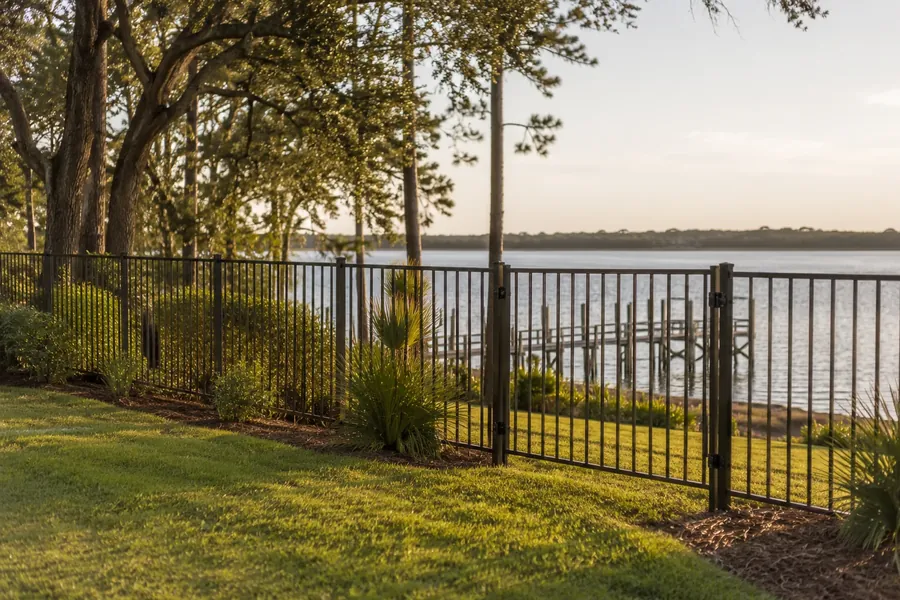
Castle Hayne, in the northern reaches of New Hanover County near the I-40 interchange corridor and the Northeast Cape Fear River, has a different character from the beaches and subdivisions to the south. Historically agricultural — this is old blueberry-and-farm country — it's now seeing brisk new construction, with homes ranging from the high $300,000s to over $1 million. The larger lots and rural feel make it prime territory for farm, estate, and privacy fencing.
Room to fence
Where Wilmington proper is quarter-acre lots, Castle Hayne has acreage — and that opens up options. Farm and ranch fencing is a specialty here: split-rail frontage and estate entrances, field and woven-wire fence for livestock and pets, and board fencing for horse properties. On the sandy, sometimes wet coastal-plain soil, we set posts deep for holding power and route long runs around low, drainage-prone ground. For homesteads that want a defined yard within the acreage, wood privacy fencing and low-maintenance vinyl both work well.
Practical fencing for working land
Rural properties often need function over flash around the back of the parcel — and chain-link (vinyl-coated to resist corrosion and blend into the treeline) is a cost-effective choice for dog runs, gardens, and equipment yards. We frequently blend styles on a single property: attractive split-rail along the road, functional fencing where it won't be seen.
Permits and growth
Larger agricultural and rural lots in Castle Hayne often have more room before setback limits come into play, but permits and easement rules still apply — and newer deed-restricted subdivisions bring their own requirements. Our permit & HOA guide is a starting point, and we confirm the details for your parcel. Though Castle Hayne is inland, properties near the Northeast Cape Fear River still see real moisture, so we use corrosion-resistant hardware as a rule — the same thinking in our materials guide. We serve Castle Hayne along with neighboring Wilmington and Leland across the river.
Farm country along the Northeast Cape Fear
Castle Hayne's roots are agricultural — this is historic blueberry-and-truck-farm country in the northern reaches of New Hanover County, threaded by the Northeast Cape Fear River and bordering the vast Holly Shelter game land. That heritage shows in the land: larger parcels, working properties, and homes on real acreage rather than quarter-acre lots. It's why farm, ranch, and estate fencing is our bread and butter here — split-rail and board frontage, field and woven-wire for animals, and long property-line runs that a subdivision fence company rarely handles.
New growth on old land
The I-40 interchange and the Castle Hayne Road corridor have made the area a genuine growth pocket, with new subdivisions and homes spanning a wide price range going up alongside the older farms and the established Wrightsboro community. That mix means we might build a privacy fence for a new-construction backyard one day and fence several acres of pasture the next. Properties near the river and the low, wet bottomland get corrosion-resistant hardware and posts set for soft ground, while higher, sandy parcels are more straightforward. Larger rural lots often have more room before setbacks bind, but permits and any deed restrictions still apply — we confirm the rules for your parcel, and serve the area alongside nearby Wilmington and Leland.
Castle Hayne Fence FAQs
Do you fence large and rural properties in Castle Hayne?
What's the best fence for a horse or livestock property?
How deep do posts go in Castle Hayne's soil?
Can I combine a nice front fence with cheaper back fencing?
Do I need a permit for fencing in Castle Hayne?
Can you fence several acres of pasture or working land in Castle Hayne?
Ready for a Fence That Lasts in Castle Hayne?
Tell us about your project and we'll get you a clear, honest estimate — built for salt air, sandy soil, and storm season. No pressure, no hard sell.
Get My Free Estimate