
Farm, Ranch & Estate Fencing near Wilmington, NC
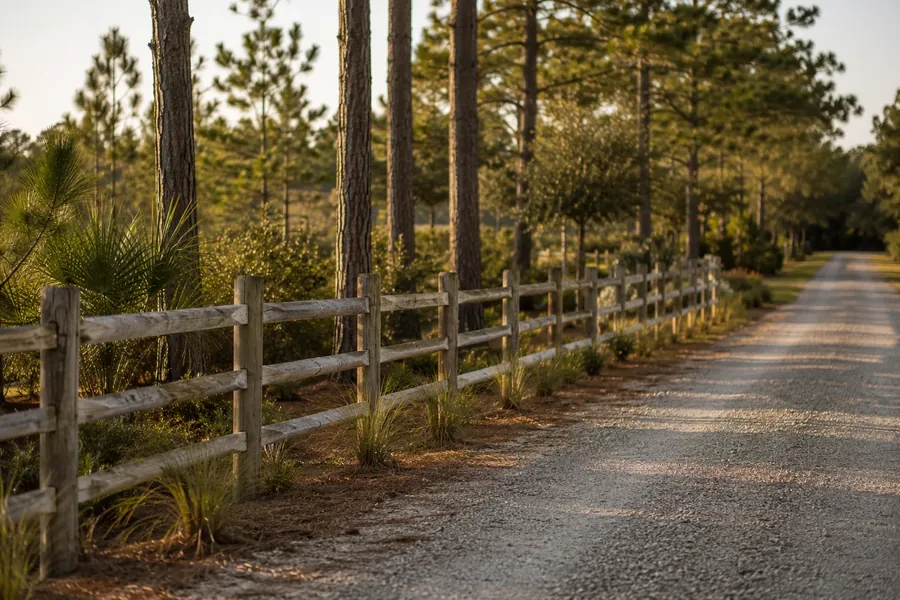
Not every property is a quarter-acre subdivision lot. Across the edges of the Cape Fear region — the larger parcels of Castle Hayne, the pine-and-marsh acreage around Hampstead, and the newer estate lots in Scotts Hill — property is measured in acres, and the fencing needs are different. Farm and ranch fencing is about covering long runs affordably, containing livestock or marking boundaries, and looking right on a rural or estate property.
Farm & ranch styles we build
| Style | Best for |
|---|---|
| Split-rail (2- & 3-rail) | Classic property borders, driveways, estate entrances |
| Post-and-rail with wire mesh | Containing dogs, goats, or small livestock while keeping the rustic look |
| Field / woven wire | Cattle, horses, and larger acreage at lower cost per foot |
| Board fence (3- & 4-board) | Horse properties and high-end estate frontage |
| High-tensile / no-climb | Horse-safe containment and predator control |
Split-rail: the coastal estate favorite
Split-rail is the most-requested rural style around here. It defines a boundary and dresses up an entrance without walling off the view, and it pairs beautifully with a wide driveway gate. We can add welded-wire mesh on the inside face to make it pet- or livestock-tight while keeping the traditional appearance from the road. On larger frontages we'll often blend split-rail along the road with more functional field or chain-link fencing around the back acreage where it won't be seen.
Built for our soil and climate
Rural coastal-plain properties bring their own challenges: sandy, sometimes wet soil, long runs that cross drainage, and exposure to the same storms as the coast. We set posts at proper depth for holding power in loose soil, plan runs around low, wet ground, and use treated timber and coated wire rated for our humidity. On horse properties we prioritize safe, visible fencing with no protruding hardware. Because rural lots tend to have real wind exposure, the same principles in our storm-ready fencing guide apply to long farm runs too.
Wood, upkeep, and longevity
Wood rail and board fences want the same care as any wood fence on the coast — a protective seal and the occasional check for rot at the base. Our coastal maintenance guide covers it. If you'd rather skip maintenance entirely on a decorative front, vinyl ranch rail is an option worth discussing.
Permits and acreage
Larger agricultural and rural lots often have more room before setback and easement limits come into play, but permits and any applicable overlay rules still apply — and if your acreage is inside an HOA or a deed-restricted community, those rules govern too. Our permit & HOA guide is a good starting point, and we'll confirm the specifics for your parcel. We serve rural and estate properties across New Hanover, Pender, and Brunswick counties, including out toward Leland.
Fencing acreage or an estate entrance? Tell us your property size and what you're containing on the free estimate form and we'll design a run that fits the land and the budget.
Frequently Asked Questions
What's the most affordable way to fence a large property?
Can split-rail fencing keep my dog in?
Do you build horse-safe fencing?
How deep do posts need to be in sandy rural soil?
Do I need a permit for farm fencing?
Ready for a Fence That Lasts on the Cape Fear coast?
Tell us about your project and we'll get you a clear, honest estimate — built for salt air, sandy soil, and storm season. No pressure, no hard sell.
Get My Free Estimate