
How to Build a Hurricane-Resistant Fence in Coastal North Carolina
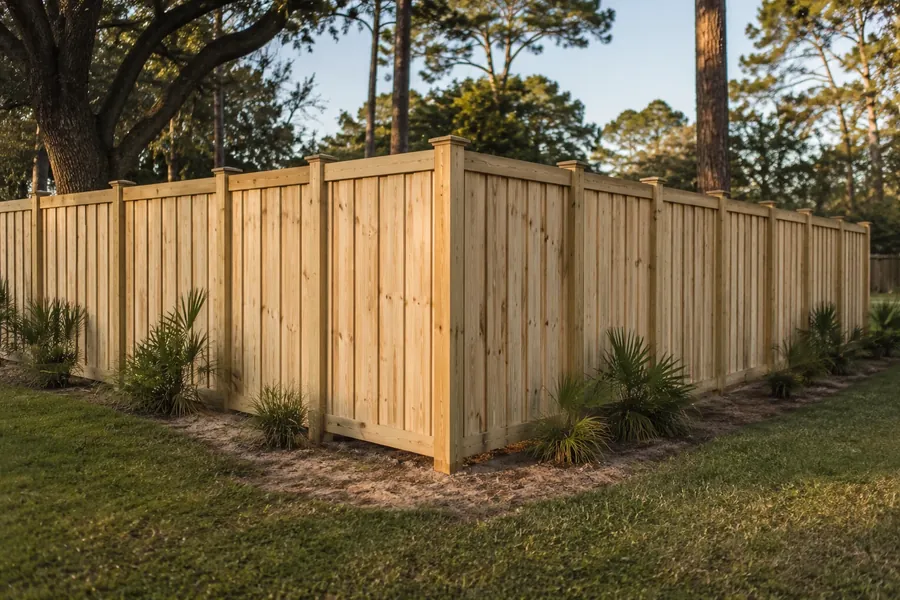
If you live anywhere from Wilmington to Topsail, hurricane season isn't hypothetical. Every year brings the risk of tropical-storm and hurricane-force winds, and fences are among the first casualties. The good news: a fence built with a few key principles has a dramatically better chance of riding out the storm. Here's what matters.
1. Footings win or lose the fight
Most fence failures start at the ground. Our sandy coastal soil gives posts far less grip than inland clay, so posts need to be set deeper and in concrete — with corner and gate posts, which take the most load, set deeper still. An undersized footing is the number-one reason fences lean and topple in wind. This is non-negotiable on the coast and it's built into every fence we install.
2. Let the wind through
A solid privacy fence acts like a sail — it catches the full force of the wind. On exposed lots, a wind-permeable design makes a huge difference. Shadowbox (good-neighbor) wood fencing, with alternating boards, lets gusts pass through while still providing strong privacy. Semi-privacy and lattice-top styles do the same. And open fences like aluminum and chain-link barely catch wind at all, which is part of why they perform well near the coast.
3. Material and hardware strength
Storm resistance is also about what doesn't break. Corrosion-weakened metal and rotted wood fail first, so coastal-grade materials and stainless or galvanized hardware — which resist the salt that erodes strength over time — are part of storm-readiness, not just longevity. Reinforced vinyl with aluminum-stiffened rails and properly framed wood both hold up far better than bargain builds. Our materials guide covers this in depth.
4. Correct post spacing
Panels spaced too far apart put more wind load on each post and rail. Proper spacing — closer on exposed, high-wind lots — spreads the load and reduces the leverage the wind can apply. It's an easy thing to get wrong and an important thing to get right.
5. Plan for water, too
Hurricanes bring flooding and storm surge, not just wind. On low or flood-prone lots we account for drainage and avoid designs that trap debris and water against the fence. Fences near the marsh or the Intracoastal get extra attention here.
After the storm
Even a well-built fence can lose a round to a major hurricane. When that happens, a leaning or partially-downed fence is often repairable — resetting posts with deeper footings and replacing failed sections — rather than a total loss. We provide storm-damage repair with insurance-ready estimates across the coast, from Carolina Beach to Surf City and Topsail Island. And storm repair is the perfect time to rebuild the failure point stronger. For a season-by-season action plan, grab our printable Hurricane Season Fence Checklist — then get a free assessment of your fence's storm-readiness anytime.
